
The Partner Visa: A Route to Immigration for Partners of UK Residents
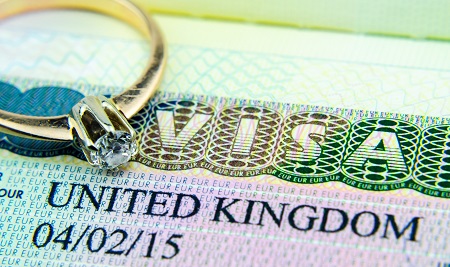
The Partner visa is an immigration route available to partners looking to move to or remain in the UK. It is available for partners of:
- British and Irish citizens;
- individuals settled in the UK;
- EU, Switzerland, Norway, Iceland and Liechtenstein nationals who have pre-settled status (they must have started living in the UK before 1 January 2021);
- Turkish Businessperson or Turkish Worker visa holders; and
- individuals with refugee status or humanitarian protection in the UK.
‘Partner’ includes spouses, civil partners and individuals who have been living in a relationship akin to marriage for at least 2 years.
The initial Partner visa is issued for 2.5 years with the possibility to extend their visa for a further 2.5 years. After 5 years under this visa route, the partner may be eligible to apply for settlement (also known as ‘indefinite leave to remain’). It can be applied for from within the UK or abroad. To apply from the UK, the applicant partner will usually need to have a visa in another visa category allowing them to live in the UK.
Below, we have outlined the requirements of the route so you can get an idea of whether it is the right one for you. Note that this article does not constitute legal advice and is provided for general information purposes only. If you require specific legal advice, please contact us.
Requirements overview
To be eligible, a couple needs to evidence:
1. Their relationship is genuine and subsisting.
This requirement is usually met by submitting documents such as:
- marriage certificate;
- official letters from the government, bank, landlord, utility providers and medical professionals, etc. showing co-habitation;
- tenancy agreement;
- bank statements from a joint account; and
- letters in support from the couple, their family and friends.
Evidence such as greetings cards, travel tickets, photographs, text messages, printout of social media accounts, calls log are not enough on their own, but should also be submitted as evidence.
2. They meet the financial requirement.
There are various ways in which the financial requirement can be met.
In essence, the financial requirement can be met through:
- salaried and non-salaried employment income;
- non-employment income, including rental/investment income;
- cash savings;
- pension funds; or
- self-employment or Director or employee of a specified limited company in the UK.
The complexity of satisfying this requirement depends on the income source(s) used. If the application is made from outside the UK, the requirement needs to be satisfied by the sponsor partner. If the application is made from within the UK, the couple’s combined income can be relied upon.
Full details for this requirement can be found here.
3. The applicant partner’s knowledge of English.
This requirement can be met through:
Academic Qualifications such as degrees taught or researched in English. The proof needed of this depends on whether the degree is from a UK or international university/college.
an English Language Test from an approved provider. The test can take place in the UK or abroad. The level of the test will depend on the application being made.
- initial visa applications, it must be at A1 level or above on the CEFR scale
- extension stage, it must be at A2 level or above on the CEFR scale
A test result can be reused in future applications if it is at the right level.
Nationals of a majority English speaking country will meet this requirement by simply submitting a copy of their passport. A list of countries that this applies to can be found here. Other exemptions apply.
4. They have suitable accommodation.
The accommodation must be suitable for human occupation and not be overcrowded. Some or all of the property/flat must be for the couple’s exclusive use. Areas such as kitchens and bathrooms can be shared, but there must be some areas (such as bedrooms) that are for the exclusive use of the couple.
Evidence such as property deeds, tenancy agreements, letter from a landlord, a mortgage statement, photographs, estate agent particulars can be used as evidence.
5. The applicant partner is of good character.
The applicant partner must be of good character. This is assessed on a case-by-case basis with areas such as criminal convictions, terrorism, financial soundness and immigration matters (such as deportation orders, false statements and illegal entry) being taken into consideration. This includes international issues and is not solely focused on the UK.
6. The applicant partner’s Tuberculosis (TB) test results, if applicable.
Depending on where the applicant partner is from, they may need a TB test. A list of countries this applies to can be found here.
7. A certified translation of any document that is not in English or Welsh.
Documents used as evidence for the visa will need to be in English or Welsh. If the document is in another language a certified translation will need to be used.
Fees
The fees associated with a Partner visa includes:
- the Home Office fee;
- Healthcare surcharge;
- English test or certificate from Ecctis (formerly UK NARIC), if applicable;
- Translation fees, if applicable; and
- TB test, if applicable.
The fees vary each year and the fees applicable to a couple will vary depending on their circumstances. Further details can be found here.
Conclusion
If you are in the midst of a Partner visa application and are facing all the doldrums, know that you are not alone. Immigration is a complicated area with plenty of hurdles that could trip you up along the way. Our advice is to plan ahead and seek legal advice as early into the process as possible.
If you or your partner are contemplating moving to the UK, please get in touch by email patricia@bradleyhayneslaw.co.uk or by phone 01905 900919 for a friendly chat. We will be more than happy to walk you through the process.